














A Pap smear (Pap test) is a routine part of your healthcare screening. They are often performed during your first prenatal visit. Research and professional organizations confirm that it is safe and an important part of keeping you healthy.
Pap smears are part of routine healthcare. It is common for individuals to get a pap smear at prenatal visits because it is not uncommon for individuals not to have seen their OB-GYN or healthcare professional for a while before their pregnancy and may be overdue for their cervical cancer screening.
If it’s time for your Pap smear or if you’re overdue for one, you will likely have a Pap smear at your first prenatal visit.
Read on for more information about why you may have a Pap smear during pregnancy, what to expect, and what care you may receive.
It is safe to get a Pap smear during pregnancy. A Pap smear cannot harm you or your baby. The baby is well protected, and the swab does not enter the womb or come near the baby. Doctors regularly perform Pap tests during pregnancy.
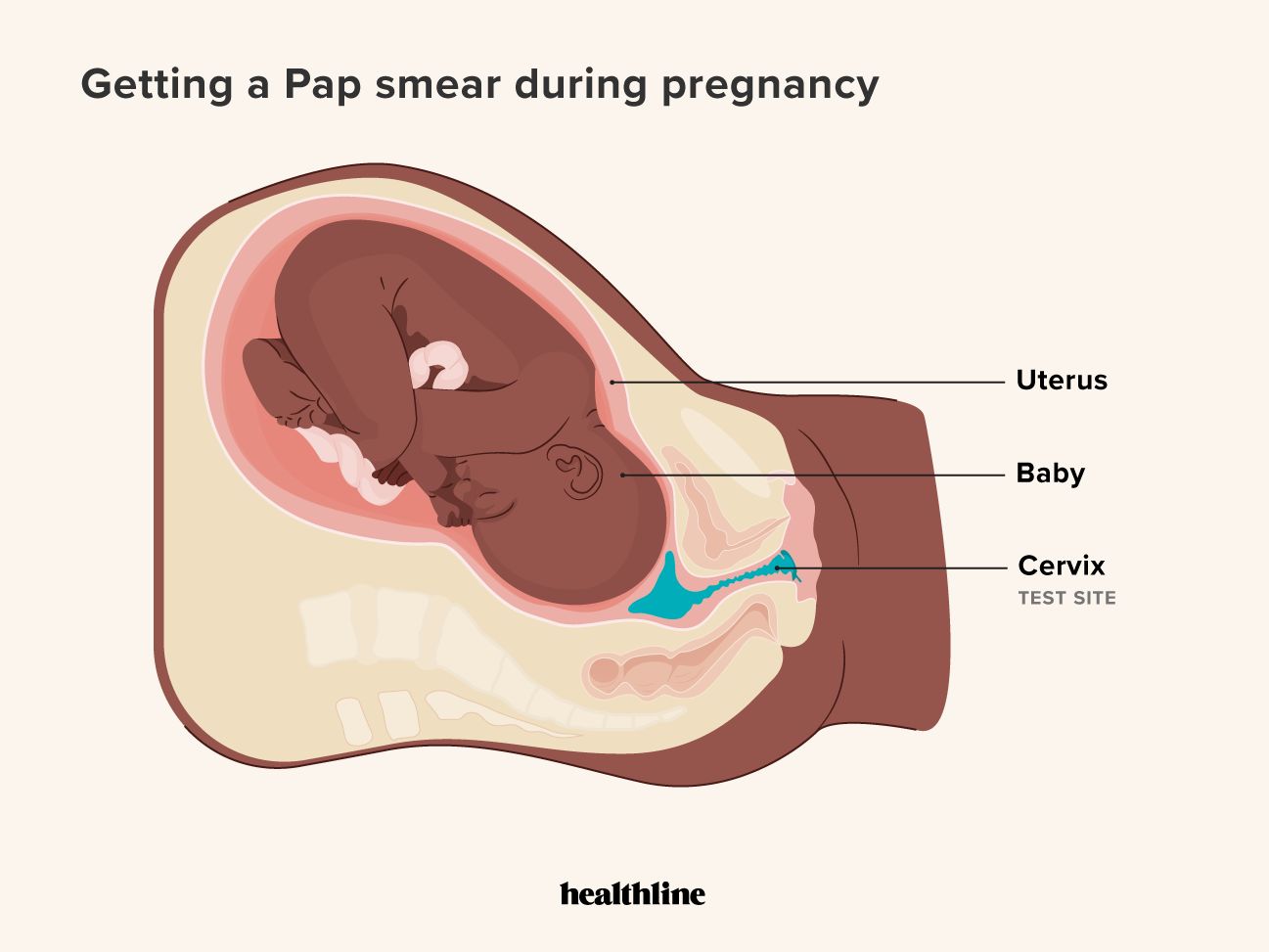
If you haven’t had a Pap smear within the recommended period of time for your age and risk, your doctor may perform one at your first prenatal visit.
A Pap smear during pregnancy is performed the same way it is done when you are not pregnant. Your doctor will insert a speculum to open your vaginal canal so they can see and reach your cervix. Using a long swab, they will gently rub the cervical area and collect a small sample of fluid and cells to send to the lab for testing.
After you have a Pap smear, you may have some spotting or very minor bleeding. This is typical because there is extra blood flow to your cervix when you are pregnant.
Pap smears are a part of your routine healthcare and health screenings. Being pregnant does not reduce your risk of developing cervical cancer, so you still need to have your screening test.
If you are pregnant during the time you are due to have a Pap smear or if you are overdue for one, your doctor may perform one at a prenatal visit.
The most common reasons why you may have a Pap smear during pregnancy include:
- You haven’t had a Pap smear within your recommended time based on your age and risk factors. Typically, that’s every 3 years for individuals 21 to 29 years old and every 5 years for individuals 30 to 65 years old (co-testing with HPV every 5 years)
- You have never had a Pap smear before.
- Your last Pap smear was abnormal and needed follow-up testing.
- Your doctor or healthcare professional recommends that you have one based on your individual risk factors.
Though possible, cervical cancer during pregnancy is very rare. If your pap smear has an abnormal result, the next steps will depend on the specific result you have.
Following an abnormal Pap smear, your doctor will likely perform a colposcopy. This test uses a magnifying instrument outside your body and a light. This lets your doctor perform a more detailed examination of your cervix and see the area better.
Your doctor will insert a speculum just as they would if you were having a typical exam and pap smear. Then, a bright light is positioned so it shines inside your vagina, and your doctor will look through the magnifying instrument to perform the exam.
Depending on the results of the colposcopy, your doctor may decide to wait until your baby is born to begin any treatment. You will have more exams during pregnancy so your doctor can monitor your cervix. Often, atypical areas may return to normal after your pregnancy is over.
If your doctor thinks you may need a biopsy, your healthcare team will balance the risk to you, your baby, and the need to test the tissue. It is very rare to have invasive cervical cancer during pregnancy. It is far more common for your doctor to be able to wait and watch until your baby is born.
You may have a Pap smear during your pregnancy if it is time for your routine screening test, if you are overdue for your Pap test, had an abnormal test that needs follow-up care, or if you are at higher risk of developing cervical cancer.
Pap smears are safe during pregnancy and are often performed during this time. Following the test, you may have spotting or light bleeding, but this is not unusual and should stop fairly quickly.
It is very rare to have an abnormal pap smear during pregnancy, but since pregnancy doesn’t protect against cervical cancer, it is possible. If this happens, your doctor will perform a more detailed exam and consult with additional specialists to help you choose the best treatment options.